Kanban Classes of Service: Definition, Types & Examples

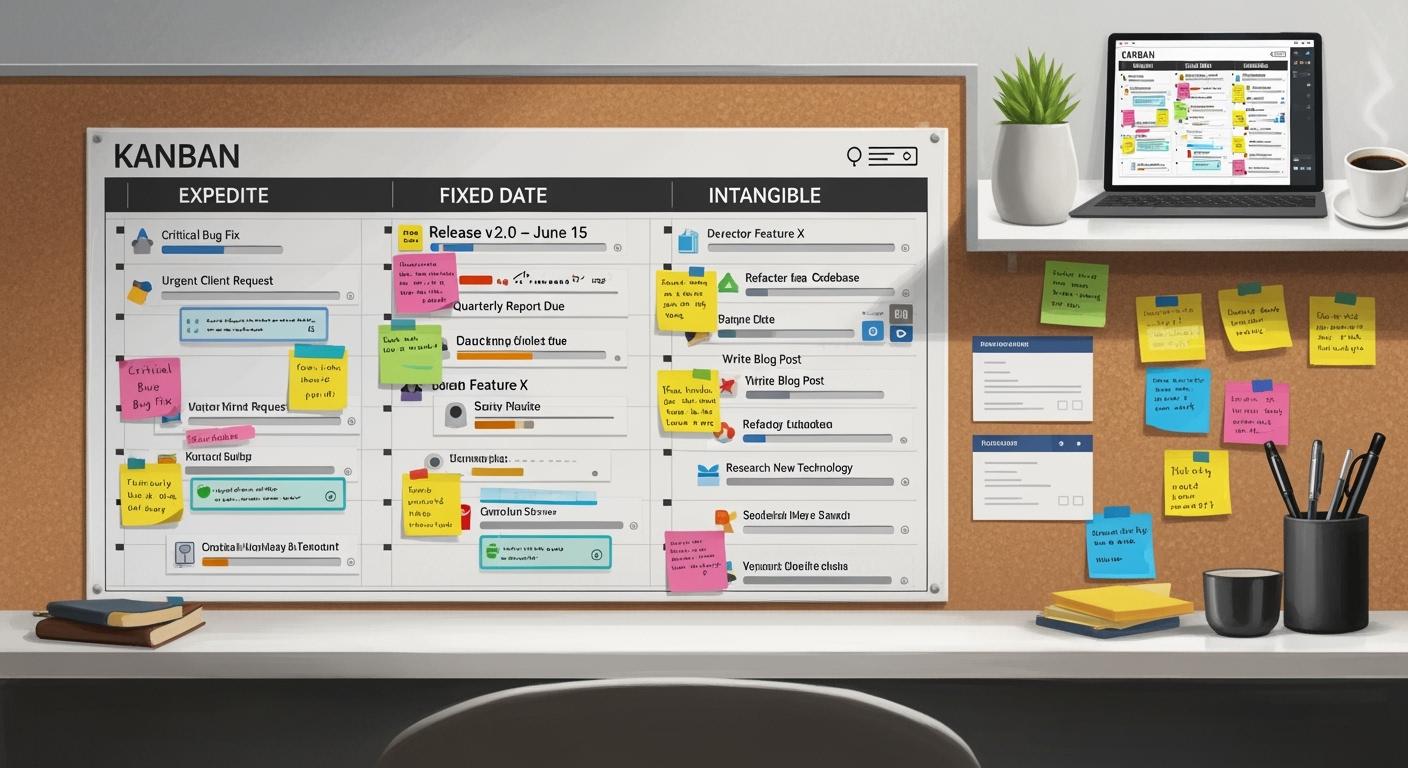
Kanban Classes of Service help you manage your work better. They also help you decide which tasks to do first. By sorting work items, you know when to start different tasks. This helps you balance risks for different types of work. These classes make it easier to prioritize tasks. This lowers stress and helps you make better choices based on facts, not just opinions. They also make your team more predictable. This boosts confidence in managing project timelines.
Using Kanban Classes of Service can change how you see and prioritize your work. It makes sure important tasks get the focus they need.
Key Takeaways
Kanban Classes of Service help decide which tasks are most important and urgent. This makes decision-making better.
Using these classes lowers stress and helps teams know what to expect. This leads to better project management.
There are four main classes: Expedite, Fixed Delivery Date, Standard, and Intangible. Each class has a special role in managing tasks.
Using Kanban Classes of Service improves teamwork and how resources are used. This makes workflows easier.
Regularly check and change task classes to fit new project needs and keep things running smoothly.
What Are Kanban Classes of Service?
Definition
Kanban Classes of Service are groups that help you manage tasks in a Kanban system. They give you a clear way to prioritize work items based on how urgent and important they are. Each class stands for a different kind of work. This helps you decide what to do first. By using these classes, you can see your workflow and know how to use resources well.
Purpose
The main goal of Kanban Classes of Service is to improve your decision-making. They help you rank tasks based on things like deadlines and business value. Here are some important reasons to use these classes:
Enhance decision-making: You can quickly see which tasks need attention now.
Manage urgency: Classes help you tell apart urgent and non-urgent tasks.
Provide flexibility: You can change priorities as project needs change.
Optimize economic outcomes: By focusing on high-value tasks, you make projects run better.
Using Kanban Classes of Service also helps with managing risks. They let you spread risk across different types of work. This way, no single task puts your project at risk. This organized method makes things more predictable and helps you manage expectations well.
To show how Kanban Classes of Service are different from other ways to prioritize tasks, look at this table:
Aspect | Kanban Classes of Service | Other Task Prioritization Methods |
|---|---|---|
Basis of Decision | Often subjective measures or opinions | |
Focus | Sequencing of work items | Prioritization of tasks |
Risk Management | Helps spread risk across different work types | May not address risk effectively |
Expectation Management | Manages expectations with lead time distribution | Relies on stakeholder opinions |
Confidence in Predictability | Improves team predictability through data | Varies based on subjective input |
By using Kanban Classes of Service, you can make your workflow better. This method cuts down on problems from multitasking and helps lower cycle times. For example, managing the oldest tasks in progress can greatly reduce cycle time. This shows a clear link between prioritization and workflow efficiency.
Types of Kanban Classes
Expedite Class
The Expedite Class is for the most important tasks in your Kanban system. You use this class for work that needs quick attention to avoid big problems. For instance, if a service goes down, you must fix it fast to stop serious issues. Tasks in this class skip the usual workflow to make sure they get solved quickly.
The Expedite class is for tasks that are very urgent and need immediate help. An example could be fixing a product or service outage that could cause big problems if not handled fast.
Fixed Delivery Date Class
The Fixed Delivery Date Class has tasks that must be done by a certain time. If you miss this time, it can cause serious issues. You might see this class in projects that need to follow rules or events like trade shows. These tasks need careful planning to finish on time.
Definition | Examples |
|---|---|
Work that must be done by a certain time, where missing that time can lead to serious problems. | Work for following rules, tasks for trade shows or conferences, and other time-sensitive projects. |
Standard Class
The Standard Class includes regular tasks that need to be done but are not as urgent as the others. These tasks are important for keeping your workflow going and making sure ongoing projects move forward smoothly. You can rank these tasks based on how important they are and what resources you have.
Intangible Class
The Intangible Class has tasks that may not have urgent deadlines but are still important. These tasks often focus on improvements or long-term goals. If you ignore them, it can lead to big problems later. You should check these tasks often to make sure they get the attention they need.
Class of Service | Definition |
|---|---|
Standard/As soon as possible (ASAP) | Normal work that needs to be done quickly. |
Fixed Date Work | Work that must be finished by a specific, important time to avoid negative outcomes. |
Expedite | Urgent work that needs quick attention to stop major issues, like service outages. |
Intangible | Work that may not have an urgent deadline but could cause big problems if ignored. |
Knowing these four classes of Kanban Classes of Service helps you manage your tasks well. Each class is important for making sure you prioritize your work based on how urgent and important it is.
Examples of Each Class
Expedite Examples
You find Expedite Class tasks when quick action is needed. For example, if an important software crashes, your team must fix it fast. Another case is when a customer reports a big bug that affects many users. In both situations, you put these tasks first to avoid more problems.
Fixed Date Examples
Fixed Delivery Date Class tasks have strict due dates. Think about a marketing team getting ready for a product launch. They need to finish promotional materials by a certain date. If they miss this date, they could lose sales. Another example is planning a conference. The team must set the agenda and speakers well before the event to make sure everything goes well.
Standard Examples
Standard Class tasks are regular work that keeps your projects moving. For instance, updating documents or doing routine maintenance on machines fits here. These tasks are important for keeping things running but don’t need immediate action. You can plan them based on what resources you have and how busy the team is.
Intangible Examples
Intangible Class tasks focus on long-term improvements. For example, a team might create new training programs for workers. While these tasks may not be urgent, ignoring them can cause skill gaps later. Another example is doing research to find new market trends. This work helps your organization stay strong over time.
By knowing these examples, you can use Kanban Classes of Service better in your projects. Each class has a special role, helping you prioritize tasks well.
Benefits of Kanban Classes of Service
Improved Prioritization
Using Kanban Classes of Service helps you prioritize tasks better. You can see which tasks need attention right away and which can wait. This organized way of working has many benefits:
Benefit | Description |
|---|---|
Helps team members understand each other better. | |
Increased focus and productivity | Lets teams work on important tasks more easily. |
Flexibility to adapt to changing priorities | Makes it easy to change plans based on project needs. |
Reduced waste of time and resources | Makes project management faster and smoother. |
With these benefits, you can handle your workload better. You will find that focusing on urgent and important tasks leads to good results.
Enhanced Collaboration
Kanban Classes of Service also help team members work together better. When you can see your tasks, everyone knows what needs to be done. This clear view helps in many ways:
You can see how work is shared among team members.
You can prioritize tasks well.
You can manage different types of work at the same time.
You can make sure important tasks get the attention they need.
By using these classes, your team can work together more smoothly. Everyone knows their jobs, which creates a better working environment.
Better Resource Allocation
Lastly, Kanban Classes of Service help you use resources better. You can make smart choices based on facts instead of feelings. Here are some benefits of this method:
You feel less stress about prioritizing tasks.
You lower the chance of making emotional decisions.
You have a clear way to prioritize based on real data.
You build more confidence in how your team works.
These classes also help you figure out the best times to start tasks. This balance across different types of work helps manage risks well. Using Classes of Service with lead time charts is a great way to manage expectations and understand delivery risks.
By using Kanban Classes of Service, you can boost team efficiency and manage workflows better. Studies show that organizations see:
Evidence Description | |
|---|---|
Better visibility of work and how teams depend on each other | Leads to improved workflow and better teamwork. |
More work flow by limiting Work in Progress (WIP) | Reduces switching tasks and helps focus, making delivery smoother. |
Change from little Kanban knowledge to common practice | Encourages a culture of ongoing improvement and efficiency in teams. |
Knowing about Kanban Classes of Service is important for good project management. You can sort tasks by how urgent they are and how much delay costs. This helps you set clear expectations and make smart choices about project schedules. Here are some main benefits:
You can prioritize tasks well.
You improve project results.
You boost teamwork.
By using these classes, you can make your workflow smoother and get better results. Use Kanban Classes of Service to improve your project management skills! 🚀
FAQ
What is the main benefit of using Kanban Classes of Service?
Kanban Classes of Service help you prioritize tasks well. They help you find urgent work, manage deadlines, and use resources smartly. This leads to better workflow and project results.
How do I determine which class a task belongs to?
You can sort tasks by how urgent and important they are. Check deadlines, business value, and possible risks. Use this info to put tasks in the right class for good prioritization.
Can I change a task's class after it's assigned?
Yes, you can change a task's class as project needs change. Flexibility is important in Kanban. Regularly check tasks and update their classes to match current priorities and situations.
How do Kanban Classes of Service improve team collaboration?
These classes give a clear view of tasks, helping team members know their roles. When everyone understands what needs attention, teamwork gets better, leading to a smoother workflow.
Are Kanban Classes of Service suitable for all types of projects?
Yes, Kanban Classes of Service can help many projects, from software development to marketing campaigns. They help you manage tasks well, no matter the project's type or difficulty.
See Also
Exploring Kanban Boards: Your Complete Guide to Understanding
Unraveling Kanban Concepts: An In-Depth Guide for All
Kanban Cards Explained: Tips for Writing and Designing Effectively
Applying Kanban Principles in A Level Business Studies Explained
Key Kanban Rules for Successful Implementation and Efficiency
