The Kanban Maturity Model Explained: Stages and How to Progress

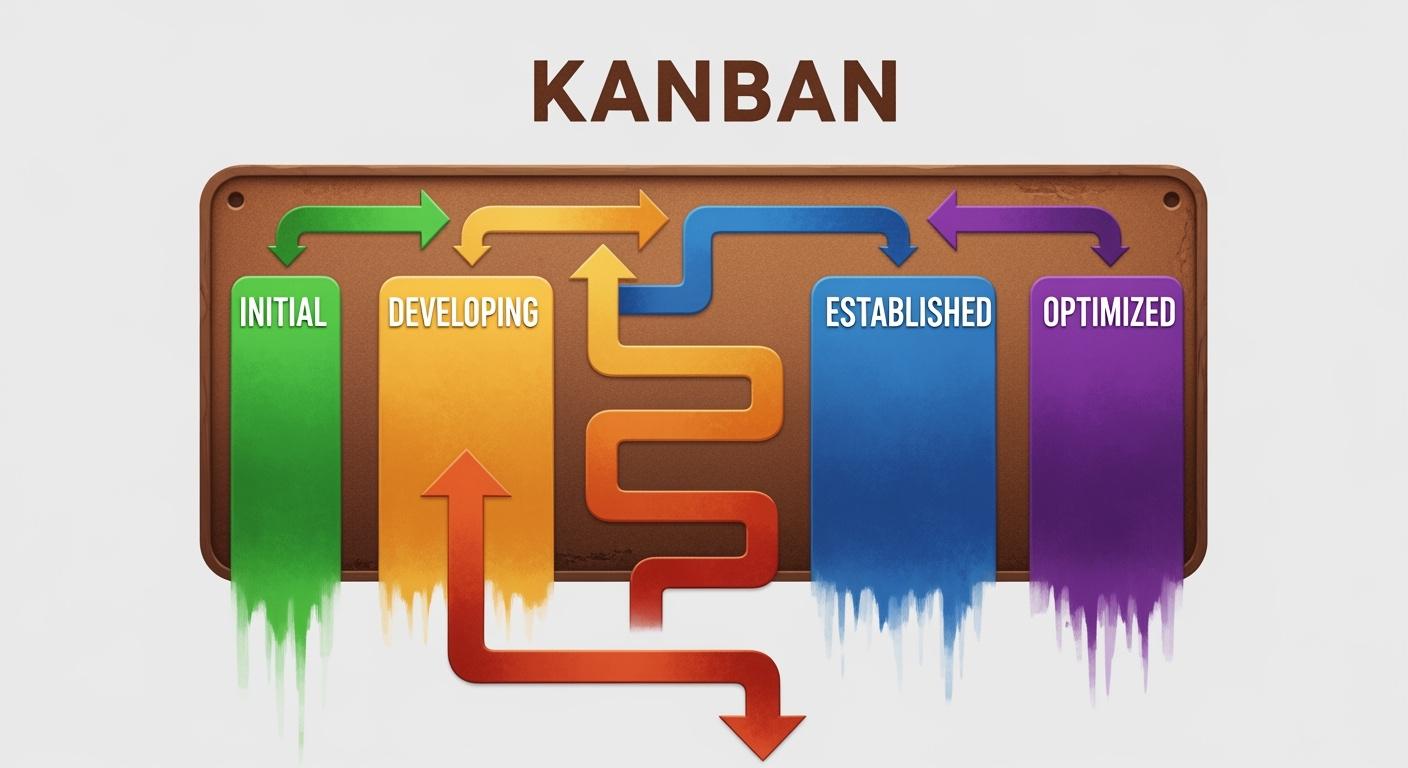
The Kanban Maturity Model helps you improve your work processes. This model gives you a way to check your current skills and plan your growth. By knowing the different stages of the kanban maturity model, you can see where you are and what to do next. Moving through these stages has many benefits. These include better efficiency, teamwork, and faster delivery times. Using this model helps your team reach its full potential in managing tasks.
Key Takeaways
The Kanban Maturity Model helps groups check their processes and plan to get better.
Moving through the Kanban stages makes things work better, improves teamwork, and makes customers happier.
Set clear goals for improvement based on where you are now to help your team grow.
Make changes by showing workflows and limiting work-in-progress to help everyone focus.
Regularly check progress and celebrate small wins to create a culture of always getting better.
Understanding the Kanban Maturity Model
Definition and Purpose
The Kanban Maturity Model is a tool to check and improve your organization's processes. It helps you see what you can do now and shows you how to get better. The model has different stages of maturity. Each stage shows a new level of understanding and using Kanban ideas.
The main goals of the Kanban Maturity Model are:
To meet and go beyond what customers want.
To make the client experience better.
To increase employee happiness and create a sense of belonging.
To make financial performance more predictable and stronger.
To clarify and manage the organization's purpose and identity.
To build better resilience against change and market shifts.
To improve the ability to handle change and survive long-term.
By using this model, you can make a plan that helps your organization grow. You will learn and apply Kanban ideas that help meet internal goals and client needs.
Importance in Transformation
The Kanban Maturity Model is very important for guiding your organization's changes. It gives a clear way to find current skills and areas to improve. This model highlights how important culture and leadership are for success.
Here’s how organizations usually use the Kanban Maturity Model for their changes:
Stage | Description |
|---|---|
1 | The starting stage where teams begin to see their work and learn basic Kanban ideas. |
2 | Teams start to make their processes better and improve flow. |
3 | Focus on teamwork and collaboration to boost overall performance. |
4 | Advanced practices are used, leading to more agility and quick responses. |
5 | Continuous improvement becomes part of the culture, focusing on learning and adapting. |
6 | Organizations reach high maturity levels with better processes and strong team work. |
7 | Mastery of Kanban practices leads to great performance and value delivery. |
As you move through these stages, you will see a change in thinking. Organizations should adopt a mindset of continuous improvement and empower their teams. This change not only improves processes but also builds a culture of teamwork and innovation.
Kanban Maturity Stages
Initial Stage
In the Initial Stage, you start your journey with Kanban. Here, you begin to see your work clearly. You might find that your processes are not very organized. Teams often have trouble seeing their workflow. This stage is very important for building a strong base for future improvements.
Developing Stage
As you move to the Developing Stage, you make your workflow easier to see. You also improve teamwork and focus more on customers. This stage is about making processes better and creating a more organized way to work. You will likely notice:
Improved teamwork
More customer-focused output
These changes help with better teamwork and productivity.
Defined Stage
In the Defined Stage, you set clear processes and roles. Your teams start to know their responsibilities better. This clarity helps improve efficiency and consistency in delivering value. You will see that teams begin to work together better, which boosts overall performance.
Managed Stage
The Managed Stage is about tracking metrics and managing performance. You start to keep an eye on key performance indicators (KPIs) to measure success. This data-driven way helps you make smart choices. You can quickly respond to changes and adjust your processes as needed.
Optimizing Stage
Finally, in the Optimizing Stage, you focus on continuous improvement. This stage uses both new and small changes. You will see that the ideas in the Optimizing Stage connect with the Japanese idea of Kaizen, which means making small, regular changes. Here are some tools that help in this stage:
Control charts show changes over time.
Capability indices like Cp and Cpk measure how well a process meets standards.
Design of experiments helps understand how different factors affect results.
These tools help you keep improving performance and make sure your processes stay efficient and effective.
Progressing Through Kanban Stages
Assessing Current Level
To start your journey with the Kanban maturity model, you need to check your current level. This check helps you see where your organization is and what needs to get better. You can use different tools to look at your Kanban practices. Here’s a helpful table that sums up key parts of this check:
Aspect | Description |
|---|---|
Key Practices | Use practices that help teams see their work and limit how much they do at once. |
Evaluation Techniques | Look at cycle times and keep improving processes. |
Framework Purpose | Gives a step-by-step way to check Kanban use and help teams get better. |
By using these methods, you can find strengths and weaknesses in your current processes. This understanding sets the stage for effective change.
Setting Improvement Goals
After you check your current level, the next step is to set clear goals for improvement. These goals should match your organization's vision and your teams' needs. Here’s a simple way to prioritize your improvement goals:
Step | Description |
|---|---|
Assess Your Current State | Know your organization’s current level and find areas to improve. |
Establish a Guiding Coalition | Create a group of leaders and experts to support the change. |
Create a Roadmap | Make a realistic plan based on your assessment results. |
Provide Training and Coaching | Give teams knowledge and skills through training. |
Start with Pilot Projects | Test and improve Kanban use with small projects. |
Foster Continuous Improvement | Build a culture of trying new things and giving feedback. |
Measure and Celebrate Success | Set metrics to track progress and celebrate wins. |
Sustain the Transformation | Make sure Kanban ideas are part of the organization’s culture. |
By following these steps, you can make a focused plan that helps your teams successfully use Kanban practices.
Implementing Changes
With your goals set, it’s time to make changes. Start by showing your workflow. Draw out the current process on a Kanban board, marking stages like To Do, In Progress, Code Review, QA, Ready for Release, and Done. This helps everyone see how work flows.
Next, define and limit work-in-progress (WIP). Setting WIP limits for each stage stops delays and keeps teams focused. Set work item rules to explain how items enter and leave each column. This keeps quality steady throughout the process.
Here are some steps to help guide your changes:
Show the Workflow.
Define and Limit Work-in-Progress (WIP).
Set Work Item Rules.
Start With Current Roles and Teams.
Use Flow Metrics to Help Improve.
Include Feedback and Learning Loops.
Scale With Portfolio Kanban (if needed).
These steps help you create a clear way to use Kanban effectively.
Measuring Progress
Finally, measuring progress is key for ongoing improvement. Set metrics to track your teams' performance. Focus on important indicators like cycle time and lead time to find delays. Regularly check these metrics to see how well your processes are doing.
Encourage a culture of feedback and learning. Use daily meetings and reviews to support the idea of inspecting and adapting. Celebrate successes, no matter how small, to inspire your teams. This recognition builds a sense of achievement and encourages ongoing commitment to improvement.
By following these steps, you can make sure your organization not only moves through the Kanban maturity stages but also embraces a culture of continuous improvement.
The Kanban Maturity Model is very important for making your organization's processes better. It helps you check where you are now and shows you each step to improve. By knowing these steps, you can boost efficiency, teamwork, and how happy customers are.
Start taking action today. First, check your current practices. Then, set clear goals for improvement and make changes. Always remember that improving continuously is very important. Accept the Kanban way of thinking, and see your organization grow.
FAQ
What is the Kanban Maturity Model?
The Kanban Maturity Model is a tool that helps organizations check their current Kanban practices. It guides teams through steps to improve their work, teamwork, and overall efficiency.
How can I assess my team's current Kanban maturity level?
You can check your team's maturity by looking at key practices, analyzing how well work is seen, and measuring performance. Use tools like surveys and feedback sessions to gather information.
What are the benefits of progressing through the Kanban stages?
Moving through the Kanban stages leads to better efficiency, teamwork, and happier customers. It creates a culture of continuous improvement and flexibility in your organization.
How often should I measure progress in Kanban?
You should check progress regularly, ideally at the end of each sprint or project. Frequent checks help you find areas to improve and celebrate successes.
Can I implement Kanban in any type of organization?
Yes, you can use Kanban in many types of organizations, no matter their size or industry. The model is flexible and can fit different workflows and team setups.
See Also
Unraveling Kanban: Your Complete Guide to Understanding It
Evaluating Success: Effective Strategies Using Kanban
Key Principles of Kanban for Streamlined Implementation
Exploring Kanban Boards: Enhance Your Productivity Effectively
